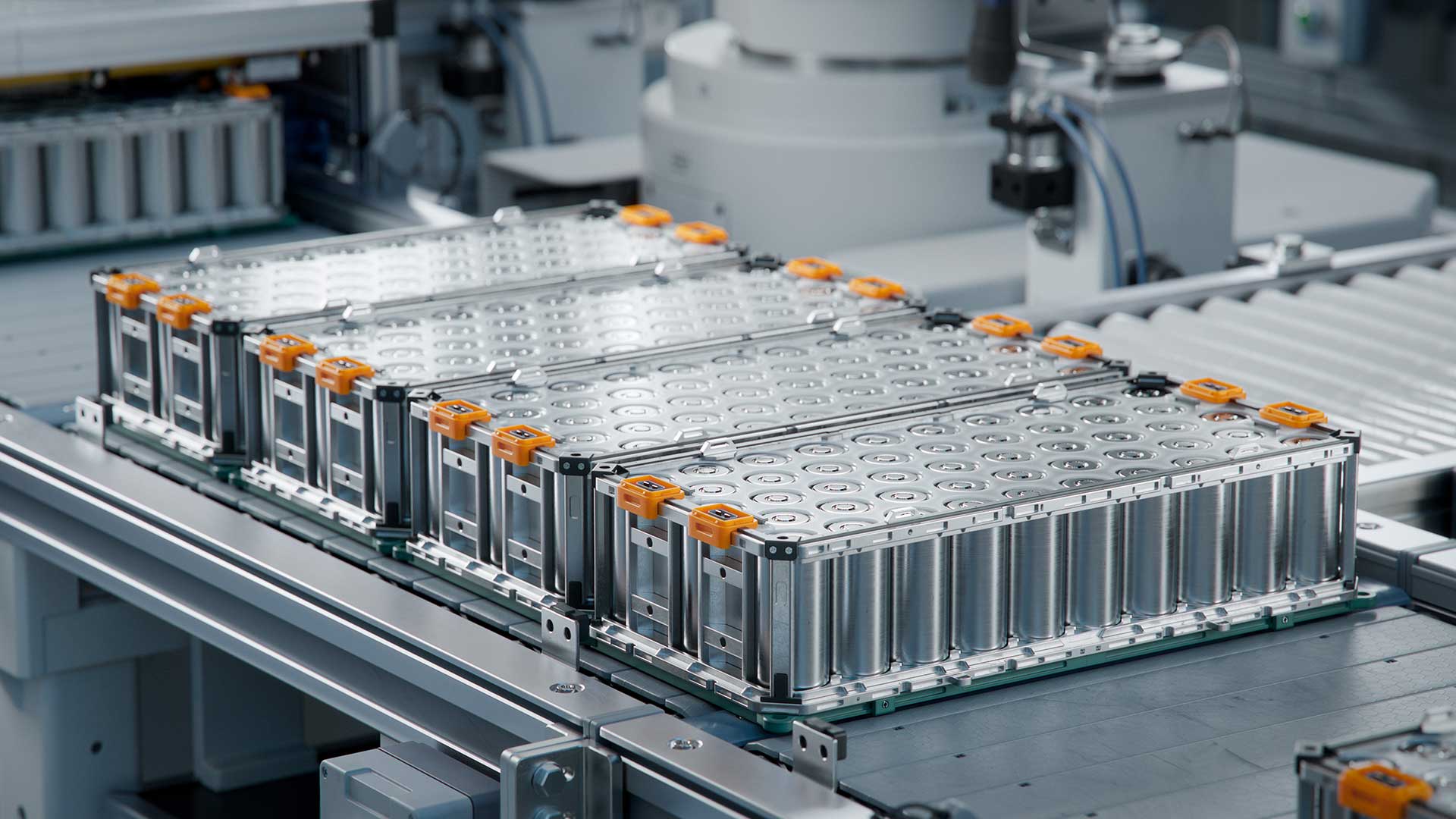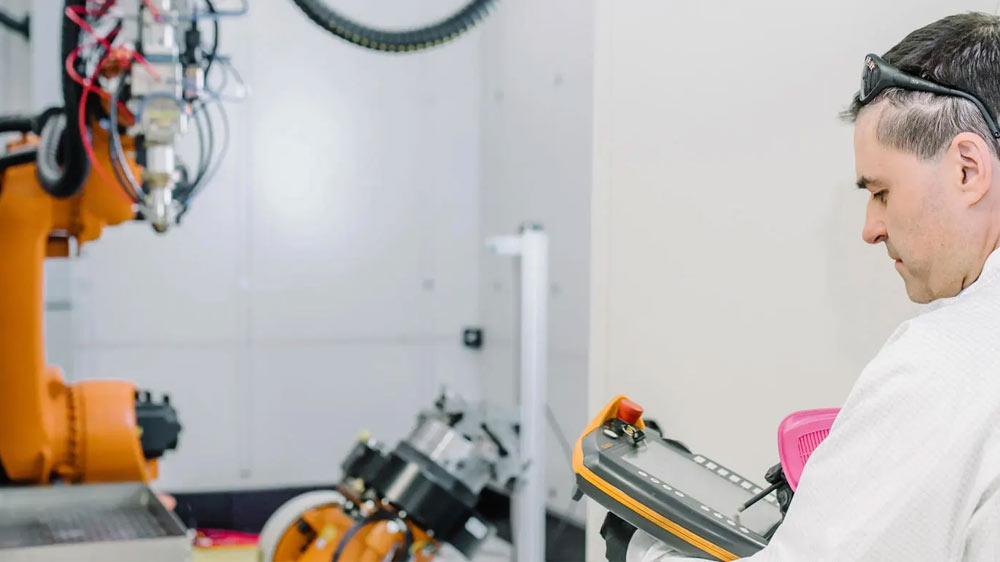


Cleanliness in manufacturing batteries used in E-Mobility and battery energy storage systems is essential to ensure manufacturing of high-quality products that are safe, reliable and efficient. In addition, with a global drive toward electrification, scarcity of raw materials has placed an emphasis on high process yields.
Contamination in the manufacturing process can result in poor performance of the module. This includes inadequate charge density, reduced usable lifetime, and in extreme cases, thermal runaway.
Battery modules also need to be durable and perform in harsh climates. They need to be structurally sound to avoid catastrophic failure in the event of a crash. Contaminants can result in decreased bonding, poor welds or failure to create full environmental sealing.
Sources of contamination can be varied and include oils and greases left over from previous manufacturing steps, contamination due to poor packing and shipment of the individual cells from a supplier or particles arising from the assembly steps themselves.
What Needs to Be Cleaned?
For battery module manufacturing some of the common applications include:
-
- Cleaning of oxides from cathode and anode of the battery as well as busbars to improve weldability and current flow.
- Cleaning of case and enclosure to remover oils and residues prior to sealing which improves environmental ingress protection.
- Cleaning before welding sealing nail for cell manufacturing.
- In prismatic cells, cleaning and activating the sides of the cells for improved bonding of electrical / thermal insulators.
- Cleaning of the contact tabs / current collectors for improved electrical conductivity.
- Cleaning of bonding surfaces for thermal monitoring sensors in the battery module.
- Cleaning of surfaces for heat exchangers on electrical components in the battery management system (BMS).
- Surface cleaning for label applications.
- Surface cleaning for installation on cooling (or heating) plate on the battery module.
- Cleaning of the contact surfaces between the modules to battery pack housing for proper heat dissipation.
How Clean Does it Need to Be?
To address these concerns automotive battery manufacturers have adopted ISO 16232 as an international standard for assessing cleanliness, while many manufacturers adopt the German Association of the Automotive industry’s VDA 19.1 and VDA 19.2; a more detailed standard. VDA19.1 is the standard practice for testing and measuring contamination while VDA 19.2 focuses on manufacturing and assembly processes aligned to prevent contamination.
The technical objective for cleaning is to clean as much as required, no more than necessary; as clean as necessary, not as clean as possible.
Evaluating Cleanliness: To achieve success in implementing cleaning practices and procedures, manufacturers will evaluate several influences in the manufacturing process including:
-
- Environment
- Logistics and Packaging
- Personnel
- Processes and Assembly devices
Environmental Evaluation: Environmental evaluation may include installation of particle traps throughput the manufacturing space to collect and analyze environmental contamination and identify localized hot spots for corrective action.
Logistics and Packaging: Logistics and packaging can also be a factor with sources such as cardboard shedding flakes and dust generated during transportation. The parts themselves may also be unclean from suppliers with poor quality control or cleaning methodologies.
Process Equipment: Process equipment itself can shed particles due to vibrations or worn components. Residual lubricants, greases, and coolants used in machine tools may contaminate machined components, or chemicals such as release agents may be present.
Design for Cleanliness: Early in the process, cleanliness needs to be considered to allow a module design that enables a cleanliness-oriented design. Considerations such as avoiding nooks and crannies that may temporarily trap swarf from a machining process as an example, can easily be designed out.
Employee Training: Training employees in cleanliness can make a major contribution to quality improvement. Training here would extend to both standards for suppliers, align with standards for the end customer and align with VDA 19 / ISO 1632.
Training would be heavily focused on factory workers handling the materials and performing assembly labor. Employees need to be informed and sensitized to the concept of technical cleanliness.
Many times, manufacturers look toward automation to eliminate variability inherent in manual processes.
Production Cleanliness Assessment:
Inspection and evaluation of production equipment is essential. Equipment, particularly components which encounter the workpieces, needs practical assessment, potential weak spots identified, and corrective action taken.
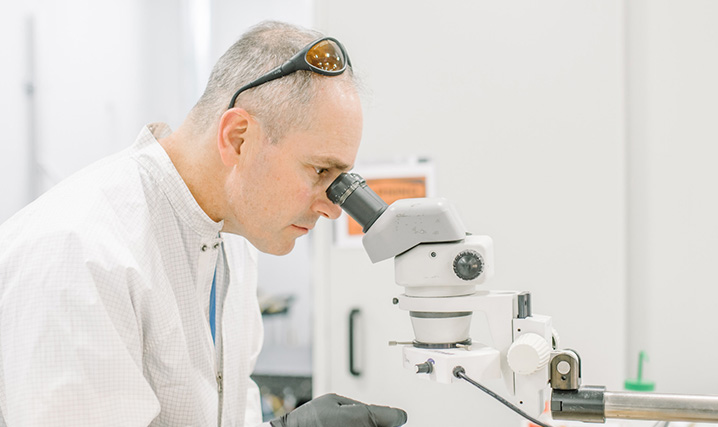
A worker inspects sample traps for contamination
Limit Determination and Creation of Specifications
With sources of contamination identified, limit determination can be carried out using statistical methods and customer guidelines to create specifications such the technical cleanliness level, proper inspection equipment, methodology and procedures.
-
- Determination of necessary requirements from customer-specific standards and specifications
- Specification of the method and parameters
- Development of process
Attaining Clean Parts
While it may be possible to monitor and measure cleanliness, at the end of the day particulates and organics will get into the production line and cleaning parts is essential to attain high quality levels. Technologies including abrasive media, dry ice blasting and chemical processes are available but not particularly adaptable to high volume in-line production operations.
It is here where laser processing can thrive as an economical and environmentally friendly solution. Common laser cleaning applications include:
-
- Cleaning contaminants like rust, oil, and combustion deposits
- Stripping coatings like paint, e-coat, ceramics, and oxides
- Increasing bonding by preparing surfaces for welding, bonding, painting, and coating
- Increasing adhesion with pre-adhesive cleaning or surface texturing.
- Increasing coating life by pre-cleaning before applying part coatings
In Summary, manufacturing high-quality products that are safe, reliable, and efficient require clean materials. Understanding sources of contamination, establishing contamination limits and focusing on objective of cleaning as much as required, not more than necessary; as clean as necessary, not as clean as possible can result in production of higher quality products while reducing scrap or rework.
Whether welding, bonding or stripping coatings, laser processes are an ideal solution that is easy to integrate into high volume manufacturing. They offer:
-
- A non-contact process that is highly flexible, highly selective and precise, allowing the laser to only clean the desired area and eliminate steps like masking.
- High-speed process; depending on the contaminants to be removed, lasers can clean hundreds of square inches per second.
- Safe and sustainable, laser cleaning eliminates the need for abrasives or chemical solvents, eliminating handling and disposal of used abrasives or chemicals.
- Easy to automate and integrate onto the production floor.
The result is highly repeatable manufacturing processes that improve product quality and production yields while being environmentally friendly.
Getting Started with a Laser Solution
Talk to one of our laser cleaning experts to get started on selecting the right system to boost battery quality, reliability and production efficiency.